
Testimonial repurposing: 12 channels for one testimonial
You spent 6 weeks collecting 47 testimonials across email and in-app prompts. You put them on your home page and testimonial wall. They sit there. The home page sees 30K visitors. The testimonial wall sees 800. Most of the 47 testimonials are never seen.
You wonder why and what to do. You have the assets. They are not deployed. This guide covers how to take 1 testimonial and use it across 10+ channels without losing impact.
This guide covers the 10+ channels where one testimonial can be deployed, the format adaptations per channel, the 4 rules that prevent damage during repurposing, and how to maintain testimonial freshness across channels. It is for marketers who have a testimonial library but want to maximize its reach, without producing new content. For the system-level view, see testimonial funnel.
The 10+ channels a single testimonial can be deployed to
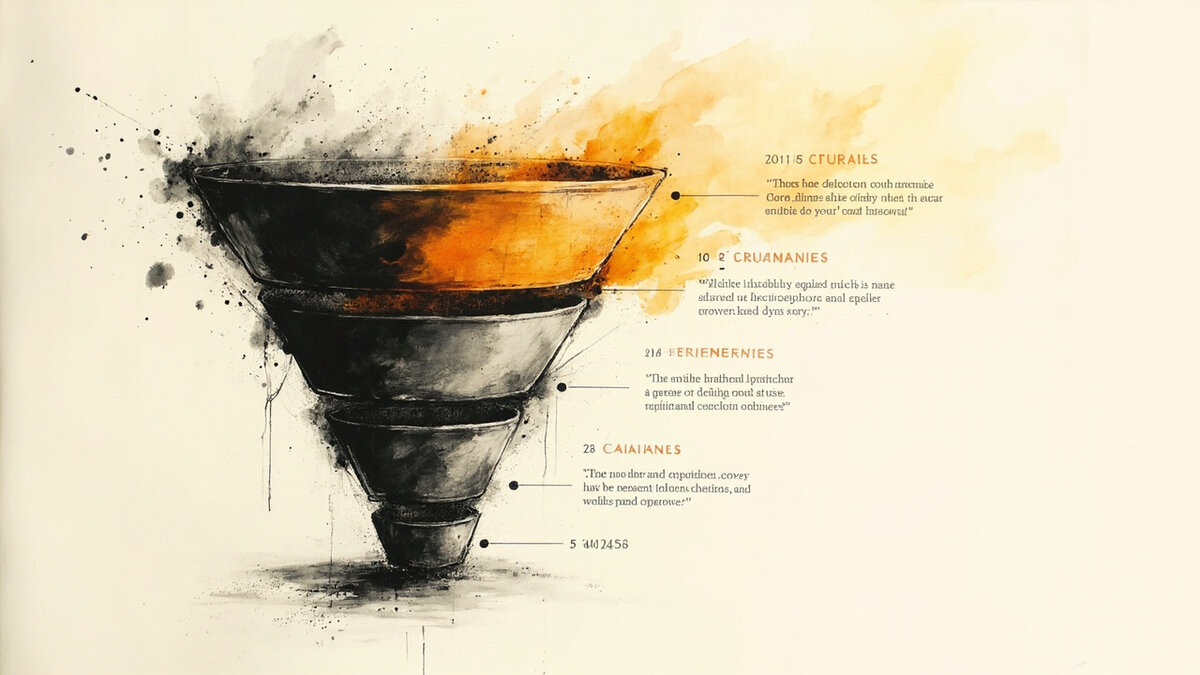
The 10+ channels below cover the typical surfaces where a single testimonial can appear. Most businesses use 3-5 of these. The goal is to reach 8-10.
Channel 1: Home page. The full testimonial in the social proof section. The most visited surface. For the broader placement strategy, see displaying testimonials.
Channel 2: Pricing page. A 1-paragraph testimonial near the plan comparison table. Reduces price sensitivity.
Channel 3: Product pages. A specific testimonial per product page, matched to the feature being shown.
Channel 4: Landing pages. Single-testimonial near CTA on PPC and lead-gen pages.
Channel 5: Sales deck. 2-3 testimonials per deck, used at decision-making moments.
Channel 6: Email signature. A short version with attribution in every team member’s email signature.
Channel 7: Newsletter campaigns. A testimonial per newsletter, paired with the topic of that issue.
Channel 8: Social ads. A short quote or image overlay in ad creative.
Channel 9: Trust badges. A short version combined with Trustpilot/G2 ratings.
Channel 10: AI search citations. Schema-marked testimonials that ChatGPT, Perplexity, Google AI Overviews cite.
Channel 11: Onboarding flows. A testimonial embedded in the new customer onboarding.
Channel 12: Customer support responses. A testimonial referenced when a prospect asks “do other customers [use case]?”
The 12 channels cover most surfaces. A single testimonial can reach 12+ channels with format adaptations.
The 6 format adaptations per channel
The 6 adaptations below describe how to reformat a single testimonial for each channel. Most use just 2-3 of these.
Adaptation 1: Headline only (5-15 words). Used for ad headlines, email subject lines, social post captions. The most condensed form.
Adaptation 2: One sentence (15-30 words). Used for navigation badge, footer signature, trust badge. Mid-condensed form.
Adaptation 3: Full paragraph (50-150 words). Used for testimonial wall, sales deck slide, pricing page context. The standard form.
Adaptation 4: Long-form with context (200-500 words). Used for case study pages, sales scripts, customer reference materials. Most contextual form.
Adaptation 5: Video clip (30-60 seconds). Used for product pages, landing pages, video testimonials. The most engaging form.
Adaptation 6: Image overlay (with photo + text). Used for social ads, banner ads, hero placements. The most visual form.
The 6 adaptations come from 1 full-text testimonial. The same source asset serves all 6 forms.
The 4 rules that prevent damage during repurposing
The 4 rules below protect the testimonial’s impact when redeployed.
Rule 1: Match length to context. A 1-sentence headline testimonial on a sales deck feels thin. A 3-paragraph testimonial on a pricing page feels overwhelming. Match the length to the visitor’s reading mode.
Rule 2: Maintain attribution. Even when shortening from 200 words to 15 words, keep the name, role, and company. Attribution is the credibility anchor. Without it, the testimonial is a generic claim.
Rule 3: Verify permission covers the new use. Permission to publish on your site does not automatically cover ads, sales decks, or AI training data. Confirm with the customer if reusing in new contexts. Most customers agree.
Rule 4: Update date stamps. If a testimonial from 2023 is being deployed on a 2025 campaign, the audience may think the experience is current. Update the timestamp or use a recent version.
The 4 rules preserve the testimonial’s credibility. Skipping any one damages it.
The format conversion matrix
The matrix below maps channels to the right adaptation. Use this when planning repurposing.
Ad → Headline only (5-15 words). Email subject line → Headline only. Badge → One sentence. Hero placement → Full paragraph. Sales deck → Full paragraph or long-form. Testimonial wall → Full paragraph. Product page → Full paragraph. Case study page → Long-form. Landing page → Full paragraph or long-form.
The matrix is the operational guide for repurposing. Use it per channel.
The 4-step repurposing process
The 4-step process below produces a repurposing plan for each quarter.
Step 1: Audit the testimonial library (1-2 weeks). List all testimonials. Categorize by use case (which product, which persona, which outcome). Identify the strongest testimonials for repurposing.
Step 2: Map each channel to the strongest testimonials (1 week). For each channel (home, pricing, ads, etc.), assign the best-fit testimonials. Match by persona, outcome, and format.
Step 3: Create format adaptations (2-3 weeks). For each channel-testimonial pair, create the adaptation (headline, paragraph, image). Most adaptations are derivative cuts. The first time is the longest.
Step 4: Deploy and measure (ongoing). Roll out the adaptations. Track conversion lift per channel. Refresh every 90 days with new testimonials and fresh adaptations.
The 4-step process produces a quarterly repurposing cadence. Each cycle reaches more channels with more impact.
The 3 mistakes that damage repurposing
The 3 mistakes below damage the testimonial’s credibility across channels.
Mistake 1: Using the same long-form everywhere. A 200-word testimonial on an ad headline feels forced. A 5-word headline on a sales deck feels thin. Match length to channel.
Mistake 2: Editing customer voice. Changing the wording to “improve” the testimonial destroys authenticity. The customer’s voice is the value. Edit only for length.
Mistake 3: Repurposing outdated testimonials. A 2022 testimonial from a since-discontinued feature is no longer accurate. Use recent testimonials for repurposing campaigns.
The 3 mistakes damage the testimonial’s impact. Avoiding them preserves the conversion lift.
What changes when you repurpose systematically
The shift is visible in 3 metrics within 90 days of systematic repurposing.
Metric 1: Channels reached. The number of channels using testimonials. Most businesses start at 3-4. Repurposing lifts to 8-12. For the data on lift per channel, see testimonial statistics.
Metric 2: Conversion rate per channel. Each channel with the right testimonial converts at higher rate. The cumulative effect compounds.
Metric 3: Cost per conversion. Repurposing recycles assets produced once. The cost per conversion drops as more channels use the same testimonial.
The right repurposing is a low-cost, high-leverage optimization. The library you already have becomes more valuable. The operational lever is a single source of truth, so the same approved testimonial can be re-cut for each channel without re-asking the customer. Testimonial platforms like Testivo maintain the source asset and let teams pull derived cuts (headline, sentence, paragraph, image overlay) for each new placement without re-collecting.
The 4-channel repurposing sequence for first-time implementations
The 4-channel sequence below is the standard rollout for businesses new to systematic repurposing.
Channel 1 (week 1-2): Home page. The home page is the highest-traffic surface. Add a 1-paragraph testimonial in the social proof section. Measure conversion lift.
Channel 2 (week 3-4): Pricing page. Add a testimonial near the plan comparison. Pricing page lift is typically the largest. Measure conversion lift.
Channel 3 (week 5-6): Sales deck. Train sales team to use 2-3 testimonials per deck. Measure win rate.
Channel 4 (week 7-8): Email signature + newsletter. Roll out at scale. Measure email CTR and reply rate.
The 4-channel sequence produces measurable lift in 8 weeks. Subsequent channels extend the reach.
How to choose which testimonials to repurpose first
The 4 criteria below help prioritize which testimonials to deploy first.
Criteria 1: Outcome specificity. Testimonials with numbers (cut by 40%, $50k saved) repurpose better than vague ones. Start with the most specific.
Criteria 2: Persona match. Testimonials whose customer matches your current best customer. Persona match produces the highest relevance.
Criteria 3: Recency. Testimonials from the last 6 months are more credible. Start with the most recent.
Criteria 4: Attribution quality. Named, full-role attribution (Sarah Chen, VP Marketing at Acme Co.) repurpose better than anonymous.
The 4 criteria help prioritize. Most libraries have 5-10 testimonials that meet all 4. Those are the candidates for first deployment.
How to measure repurposing impact per channel
The 4 measurement tactics below tell you which channels and formats lift conversions the most.
Tactic 1: Channel-level conversion tracking. Tag each testimonial placement by channel. Compare conversion rates on pages with the placement vs pages without.
Tactic 2: A/B test head vs paragraph. Test the same testimonial in 2 formats on the same channel. The head-only version may convert higher on scan-mode pages. The paragraph version may convert higher on read-mode pages.
Tactic 3: Track which testimonial drives pipeline. UTM parameters per channel-testimonial pair. Sales team notes which testimonial the prospect mentioned.
Tactic 4: Quarterly impact report. Aggregate conversions per testimonial per quarter. Top 10 testimonials get more repurposing; bottom 10 get refreshed or retired.
The 4 tactics produce data for prioritization. The best testimonials get broader deployment.
Your next move: take your strongest testimonial (specific outcome + named attribution). Re-cut it into the 6 format adaptations in this guide. Deploy to 4 of the 12 channels (typically home page, pricing page, email signature, and one social ad). Measure conversion lift per channel after 30 days. Then expand to more channels with the next-strongest testimonial. Related: testimonial library organization. Related: testimonial content strategy.