Testimonial forms: the 5-7 fields that get 50%+ completion
A working testimonial form has 5-7 fields, 3 question patterns, 4 form-type options, 3 consent best practices, 4 sections, and 4 deployment steps. The fields: full name, role and company, star rating, the testimonial text or video, and permission to publish.
The order: identity fields first, rating second, content third, permission last. The right form captures specific, attributed content in under 2 minutes. The wrong form produces vague, unusable testimonials that nobody publishes. The sections below cover everything needed to build, deploy, and optimize a testimonial form that converts at 50%+ completion rate.
This page is the canonical form reference. The how to collect testimonials page is the general collection process. The how to ask for a testimonial page is the asking side.
The testimonial questions page is the question patterns. The AI testimonial collection page is the AI/automation view. This page is the form itself: the fields, the order, the patterns, the form types, the consent, the deployment, and the mobile optimization.
What a testimonial form is, and what it isn’t
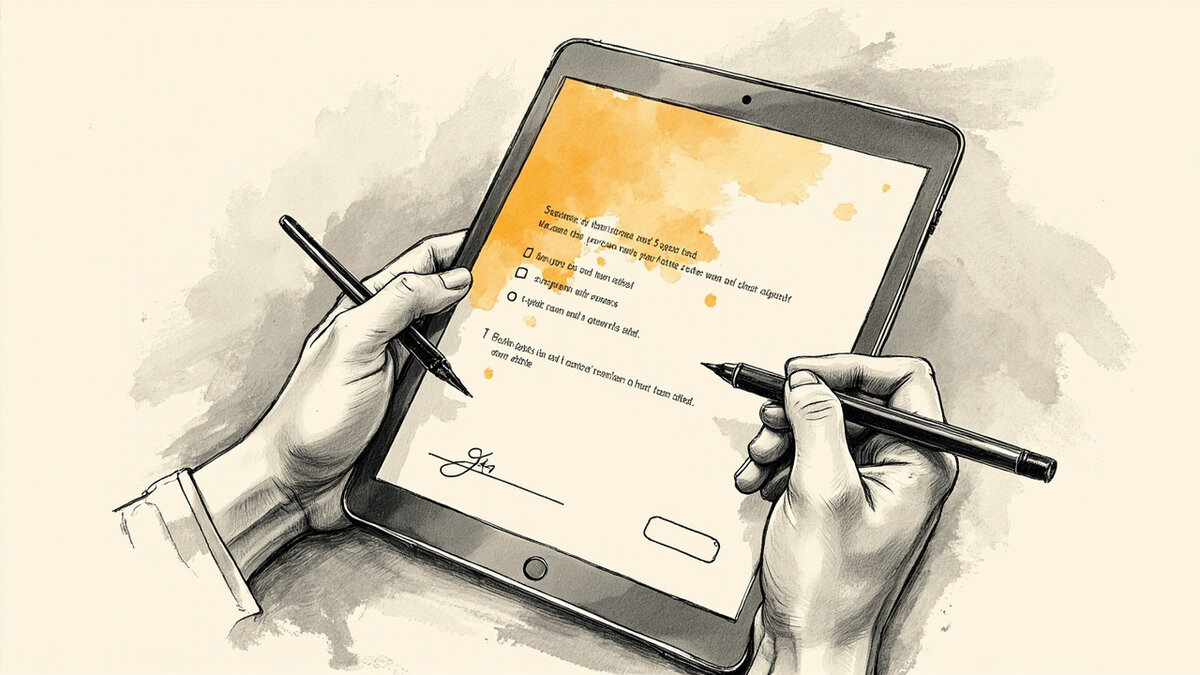
A testimonial form is a web form that captures customer testimonials. The form has 5-7 fields. The form takes 1-2 minutes to complete. The form outputs structured data (name, role, company, rating, testimonial text, permission) that the team can use on the website wall. The form is the entry point for 80% of testimonial collection workflows.
A testimonial form is not a survey. A survey has 20+ questions. A testimonial form has 5-7. The survey measures something. The testimonial form captures something. The survey is quantitative. The testimonial form is qualitative. The two are different formats, different goals, different completion rates.
A testimonial form is also not a contact form. A contact form captures the customer’s interest. A testimonial form captures the customer’s past experience. The contact form is for sales. The testimonial form is for marketing. The two are different in intent, in design, and in the data they capture.
The 5 required fields
Field 1 is full name. The form requires both first and last name. The full name is the smallest unit of credibility. A testimonial attributed to “John Smith” is more credible than one attributed to “John”. A “first name only” form produces testimonials that the reader cannot trust.
Field 2 is role and company. The form asks for both in one field (“Role at Company” or “Title, Company”). The role+company is the second unit of credibility. The reader can verify by looking up the person on LinkedIn. The role+company is the attribution that makes the testimonial actionable.
Field 3 is the star rating. The form asks for a 1-5 star rating. The rating is the structured input that powers the Schema.org Review markup. The rating is the trust signal that appears on the wall. The rating is required because the structured data needs it.
Field 4 is the testimonial content. The form offers both text and video options. The text field accepts 50-2,000 characters. The video field accepts files up to 500MB. The customer picks the format. The form defaults to text and lets the customer upgrade to video if they want.
Field 5 is the permission to publish. The form asks: “I give permission to publish this testimonial on [company]’s website and social channels.” The permission is required. The permission is a checkbox, not a typed answer. The form also has a “what to publish” option: with or without photo, with or without company logo.
The 2 optional fields
Field 6 is the customer photo. The form accepts JPG, PNG, or WebP up to 10MB. The photo is optional. The photo adds visual credibility. The photo is the difference between a text quote and a face with a quote. The photo is the optional field that 30-50% of customers provide.
Field 7 is the public profile link. The form accepts a URL to LinkedIn, Twitter, or the customer’s website. The profile link is the third unit of credibility. The reader can verify the customer exists. The profile link is the optional field that 20-30% of customers provide.
The field order rationale
Identity fields come first. The form asks for name, then role+company, in that order. The customer types their name without thinking. The momentum carries them into the next field. The form does not start with the rating or the testimonial because the substantive fields feel like bigger commitments.
The rating comes before the testimonial text. The rating is a small, low-friction input. The customer clicks 5 stars in 2 seconds. The act of rating produces a positive emotional state. The positive state makes the testimonial text easier to write. The rating is the warmup.
The testimonial text or video comes after the rating. The customer has already committed small (name, role, rating). The larger commitment (the testimonial) is the next step. The momentum carries through. The form is engineered to maximize the small-commitments before the big one.
The permission comes last. The customer has already given the substantive content. The permission is the administrative wrap-up. The form is almost done. The customer clicks the box and submits. The permission is the close.
The required vs optional policy
Required fields: name, role and company, star rating, testimonial content, permission to publish. The form cannot submit without these. The form’s value is in the structured output, and the structured output requires all five.
Optional fields: photo, public profile link. The form can submit without these. The form’s value is preserved without them. The fields are there for the customers who want to add them, not for the customers who do not.
The “all fields required” form produces lower completion. The “required = 5, optional = 2” form produces higher completion because the customer who wants to be quick can be quick, and the customer who wants to be thorough can be thorough. The flexibility is what produces the higher overall submission rate.
The 3 question patterns
The first pattern is the outcome pattern. “What was the outcome? What changed for you or your team after using [product]?” The outcome pattern produces specific results. The pattern works for SaaS and services where the outcome is measurable. The pattern produces the highest-quality testimonials.
The second pattern is the story pattern. “Tell us about your experience. What was the before, what was the after, what surprised you?” The story pattern produces narrative testimonials. The pattern works for brands that want long-form, case-study-style testimonials. The pattern produces the most-detailed testimonials.
The third pattern is the recommendation pattern. “Would you recommend [product]? What would you say to someone considering it?” The recommendation pattern produces recommendation-style testimonials. The pattern works for brands that want conversational, quote-style testimonials. The pattern produces the most-shareable testimonials.
The 4 form-type options
The first option is Google Forms. The free option. The form is built in minutes. The data lands in a Google Sheet. The form has Google branding (a turn-off for some). The form is best for teams that want speed and do not need design control. The form is the lowest-effort option.
The second option is Typeform. The design-led option. The form is conversational (one question at a time). The data lands in Typeform and can be exported. The form is paid above 10 responses per month. The form is best for teams that want a beautiful form experience. The form is the highest-conversion option.
The third option is an embedded form via a testimonial tool. The testimonial tool (Testivo, Senja, Testimonial.to) provides a form that is embedded in the website. The data lands in the tool’s dashboard. The form is best for teams that want a complete collection-to-display pipeline. The form is the most-integrated option.
The fourth option is a hosted form built into the website’s CMS. The form is built into the website’s CMS or via a form plugin (WPForms, Gravity Forms). The form has full design control. The form is best for teams with developer resources that want full customization. The form is the most-customized option.
The 3 form templates
The first template is the text-only template. The form has the 5 required fields plus the 2 optional fields. The testimonial field is a textarea with a 50-2,000 character limit. The form is 5-7 fields. The form takes 1-2 minutes to complete. The text-only template is right for B2B SaaS where most testimonials are text.
The second template is the video template. The form has the 5 required fields, but the testimonial field defaults to video upload, with text as a fallback. The form is 5-7 fields. The form takes 2-5 minutes to complete (including recording). The video template is right for ecommerce or product-led brands where video is the strategic format.
The third template is the mixed template. The form has the 5 required fields, with the testimonial field showing both options: “Write your testimonial” or “Record a video.” The customer picks. The form is 5-7 fields. The form takes 1-5 minutes depending on the choice. The mixed template is right when the team is unsure which format will dominate, or when both are strategically important.
The 3 consent best practices
The first best practice is specific consent. The consent text says exactly what the team will do with the testimonial. The text is not buried in a terms-of-service link. The text is on the form, visible, scannable. The specific text is the legal floor.
The second best practice is the opt-in checkbox (not opt-out). The customer checks a box to consent. The team does not pre-check the box. The opt-in is the GDPR and CAN-SPAM compliant default. The opt-in is the consent floor.
The third best practice is the consent record. The form records the timestamp, the IP address, the consent text, and the checkbox state. The team has a defensible consent trail if the testimonial is challenged later. The consent record is the documentation floor.
The 4-step deployment process
Step 1 is to pick the form tool. The team picks Google Forms (free), Typeform (design), embedded (full pipeline), or hosted (custom). The pick depends on the team’s needs, the team’s budget, and the team’s design requirements. The pick determines the rest of the deployment.
Step 2 is to build the 7 fields. The team creates the fields in the order of the customer journey (attribution first, testimonial second, consent last). The form has a progress indicator if it has 5+ fields. The form is mobile-responsive. The form is the artifact.
Step 3 is to add the consent. The team adds the consent text, the opt-in checkbox, the consent record. The form is legally compliant. The form is GDPR-ready. The form is CAN-SPAM-ready. The form is the legal artifact.
Step 4 is to test the form. The team fills out the form as a customer would. The team checks the thank-you page. The team checks the data flow to the destination (Google Sheet, dashboard, CMS). The team fixes any issues before going live. The form is launch-ready.
The 4 most common form failure modes
The first failure mode is the too-long form. The form has 15 fields. The form takes 8 minutes to complete. The form completion rate is 5%. The fix is to cut the form to 5-7 fields. The fields the team thinks are essential (industry, company size, use case) can be set in the curation step, not in the collection step.
The second failure mode is the account-required form. The customer has to create an account before they can submit. The customer abandons. The form completion rate is near zero. The fix is to remove the account requirement. The customer should be able to submit a testimonial without signing up for anything.
The third failure mode is the wrong-permission form. The form asks for permission but does not specify what the permission covers. The customer is uncertain. The customer does not submit. The fix is to make the permission specific: “I give permission to publish on your website and LinkedIn” with a checkbox, not a typed “I agree” with no context.
The fourth failure mode is the no-thank-you form. The form submits but does not show a thank-you page. The customer does not know if the submission went through. The customer is uncertain. The customer does not follow up. The fix is to show a clear thank-you page that says what happens next and when the customer will hear back.
The mobile optimization checklist
First: the form is one column on mobile. Two-column layouts do not work on a phone screen. The customer should not have to scroll horizontally. The form is single-column.
Second: the input fields are large enough to tap. The recommended tap target is 44×44 pixels. The form does not have small inputs that require precise tapping. The form is thumb-friendly.
Third: the video upload works from the phone’s camera. The customer can record a video in the form, not download the form to a desktop to record. The form is camera-integrated.
Fourth: the submit button is visible without scrolling. The customer can see and tap the submit button at all times. A submit button that requires scrolling to find is a conversion killer. The form has a sticky submit button on mobile.
Fifth: the form saves partial progress. If the customer closes the form and comes back, the form remembers what they typed. The customer does not have to start over. The form is resume-friendly.
The 4 ways to drive traffic to the form
The first way is the email signature. The team adds a “Leave us a testimonial” link to the email signature. Every email the team sends becomes a form visit opportunity. The link is short and clear. The signature is the highest-volume form driver.
The second way is the post-purchase email. The team sends a “Thank you for your purchase” email 14-30 days after the purchase. The email includes a testimonial form link. The post-purchase email has a 30-50% open rate. The post-purchase email is the highest-conversion form driver.
The third way is the website footer. The team adds a “Leave a testimonial” link to the website footer. Every page on the site becomes a form visit opportunity. The footer is the highest-coverage form driver.
The fourth way is the customer success team. The team trains the customer success team to ask for testimonials in person (or in support conversations). The CS team sends the form link directly. The CS team is the highest-quality form driver.
The 3 things to do after the form is live
The first thing is to send the first 5 personal emails with the form link. The team does not wait for organic traffic. The team identifies 5 happy customers and asks them directly. The 5 testimonials seed the wall. The 5 testimonials are the social proof proof.
The second thing is to add the form to the website’s footer or main nav. The form is discoverable. The visitor who wants to leave a testimonial can find the form in 10 seconds. The discoverability is the ongoing collection floor.
The third thing is to set up the auto-approval workflow. The form submission is reviewed within 24 hours. The review is for spam, abuse, and obvious quality issues. The auto-approval is the operational floor. The review cycle is the quality floor.
The 3 questions to ask when choosing a form tool
Question 1: does the tool support the 5 required fields out of the box? The form tool must have name, role+company, rating, testimonial text, and permission as pre-built fields. If not, the team has to build the fields manually. The pre-built fields save 4-8 hours per form.
Question 2: does the tool generate the schema markup automatically? The form tool must generate the Schema.org Review markup from the form submission. If not, the team has to build the schema manually. The auto-generated schema saves 2-4 hours per form.
Question 3: does the tool integrate with the team’s existing wall? The form tool must push the submission to the wall. If not, the team has to copy-paste from the form to the wall. The integration saves 1-2 hours per submission. The integration is the operational floor.
The 4 things to skip in form design
Skip 1: the CAPTCHA. The CAPTCHA adds friction. The CAPTCHA reduces completion rate by 10-20%. The CAPTCHA is not needed for testimonial forms (the spam rate is low). The CAPTCHA is a conversion killer.
Skip 2: the social login. The social login adds friction. The social login reduces completion rate by 15-25%. The social login is not needed for testimonial forms (the team already has the customer’s email). The social login is a conversion killer.
Skip 3: the multi-step form. The multi-step form adds friction. The multi-step form reduces completion rate by 20-30%. The multi-step form is right for surveys, not for testimonial forms. The single-page form is the right pattern.
Skip 4: the open-ended text field with no character limit. The unlimited text field produces long, unfocused testimonials. The team cannot use them on the wall. The character limit forces focus. The 50-2,000 character range is the right pattern.
The 5 KPIs to track
KPI 1: form views. The team tracks how many times the form is loaded. The number is the top-of-funnel. The number tells the team how many visitors saw the opportunity.
KPI 2: form starts. The team tracks how many visitors start filling out the form. The number is the engagement rate. The number tells the team how many visitors committed to the first field.
KPI 3: form completions. The team tracks how many visitors complete and submit the form. The number is the conversion rate. The number is the operational KPI.
KPI 4: time to complete. The team tracks the average time from form start to form submit. The number is the friction signal. The number tells the team if the form is too long.
KPI 5: testimonial quality. The team tracks the percentage of completions that get published to the wall. The number is the quality signal. The number tells the team if the form is producing usable content.
The 4 mistakes to avoid in form copy
Mistake 1: the generic call-to-action. “Submit” is generic. “Share your testimonial” is specific. The specific CTA produces 10-20% higher completion. The CTA is the first thing the customer reads.
Mistake 2: the long intro text. “We’d love to hear from you. Your feedback helps us improve. Please take a few minutes to share your experience with us. We really appreciate it.” The text is too long. The form should be 1-2 sentences of intro, max. The long intro reduces completion.
Mistake 3: the missing privacy reassurance. “We’ll never share your information without permission.” The line is a completion driver. The line is 1 sentence. The line is on the form, near the submit button. The privacy reassurance is the trust floor.
Mistake 4: the missing thank-you. “Thank you! We’ll review your testimonial within 24 hours.” The thank-you confirms the submission. The thank-you tells the customer what happens next. The thank-you is the closing trust signal.
For the customer feedback category (5 channels, 4-step loop), see the customer feedback.
The journey after this page
If you have the form and want the collection process, the how to collect testimonials page is the parent reference. For the asking side (the outreach that gets customers to the form), the how to ask for a testimonial page is the lifecycle reference.
For the questions to put in the testimonial field, the testimonial questions page is the prompts reference. For the AI/automation view, the AI testimonial collection page is the dedicated reference. For the WordPress-specific deployment, the testimonials on WordPress page is the platform reference.
For the format the customer submits in the form, the testimonial examples page is the gallery of good testimonials that the form should produce. For the asking templates that link to the form, the testimonial request templates page is the email and message templates that include the form link.
For the import side (when the form is not the entry point), the testimonial import page is the dedicated reference.
For teams that want the form wired up to a shareable collection link with no account requirement, mobile-first design, and built-in schema generation, Testivo is one tool that supports the 5-7 field structure with text and video options. The form is the capture touchpoint. The wall is the display surface that follows. The schema is the AI-and-search signal that lifts the page.
The 4 form-builder categories
The 4 form-builder categories are the 4 different types of tools the team can use to build the form. Each category has different tradeoffs in cost, customization, and integration. The right category depends on the team’s needs and the team’s existing stack.
Category 1: free standalone tools. Google Forms, Microsoft Forms, Jotform (free tier), Tally. The free tier has limited features. The branding is the tool’s, not the team’s. The data lands in the tool’s storage. The free tier is best for teams that want to start with zero budget.
Category 2: paid standalone tools. Typeform, Jotform (paid tier), Formstack, Cognito Forms. The paid tier unlocks custom branding, advanced logic, and integrations. The data lands in the tool’s storage with export options. The paid tier is best for teams that want design and customization.
Category 3: testimonial-tool embedded forms. Testivo, Senja, Testimonial.to, Famewall. The testimonial tool provides a form pre-built for testimonials. The data lands in the tool’s dashboard. The form integrates with the testimonial wall. The embedded form is best for teams that want a complete collection-to-display pipeline.
Category 4: website CMS forms. WPForms (WordPress), Gravity Forms (WordPress), Webflow Forms, Shopify Forms, custom HTML. The form is built into the website. The data lands in the CMS or the database. The form has full design control. The CMS form is best for teams with developer resources that want full customization.
The 6 form-builder comparison
The 6 form-builders compared across 5 criteria. The criteria: cost, customization, testimonial-specific features, integration, schema generation.
Google Forms: Free. Low customization. No testimonial-specific features. Limited integration. No schema generation. The right pick for budget-conscious teams starting out.
Typeform: $25-83/month (billed annually). High customization. No testimonial-specific features. Strong integration (Zapier, Make). No schema generation. The right pick for design-led brands.
WPForms: Free-$200/year. Medium customization. No testimonial-specific features. Strong integration (WordPress ecosystem). No schema generation. The right pick for WordPress teams.
Testivo: Free (15 testimonials). Medium customization. Built-in testimonial-specific features (5-7 field structure, rating field, video upload). Strong integration (wall display). Full schema generation (Review + AggregateRating + llms.txt). The right pick for teams that want the complete pipeline.
Senja: Free (10 testimonials). High customization (18 widget types). Built-in testimonial-specific features. Strong integration. Basic schema generation (Review). The right pick for design-led teams using Senja.
Testimonial.to: Free (10 testimonials). Low customization. Built-in testimonial-specific features. Limited integration. Basic schema generation. The right pick for teams that want the simplest setup.
When NOT to use a form at all
There are 4 situations where a form is not the right tool. The right tool in these situations is to skip the form entirely or use a different collection mechanism.
Situation 1: less than 5 testimonials expected. The form is overkill. The team sends 5 personal emails with a “paste your testimonial here” prompt. The form is for volume; the personal ask is for high-touch accounts.
Situation 2: video is the only format. The form is text-first. The video-first teams should use a video-recording tool (Loom, Vidyard) instead of a form. The form adds friction to the video workflow.
Situation 3: the customer is highly motivated (e.g., a brand advocate). The form adds friction. The brand advocate wants to write freely. The team sends a personal email with a “write back” prompt. The form is for unmotivated customers; the personal ask is for motivated ones.
Situation 4: the testimonial must be in a specific format (e.g., case study). The form captures unstructured text. The case study needs structured sections (problem, solution, outcome). The case study needs an interview or a structured intake, not a form.
The 4-step form optimization process
Step 1 is to measure the baseline. The team measures the current form’s completion rate. The team measures the time to complete. The team measures the testimonial quality (percentage published to the wall). The baseline is the starting point.
Step 2 is to identify the biggest drop-off. The team uses form analytics (Typeform, WPForms, Testivo all have this) to see where customers abandon. The biggest drop-off is the highest-leverage fix.
Step 3 is to fix the biggest drop-off first. The team makes one change at a time. The team waits 1-2 weeks to see the impact. The team documents the change and the result.
Step 4 is to iterate. The team repeats the process. Each iteration improves one of the 5 KPIs (views, starts, completions, time, quality). The optimization compounds over time. The 50%+ completion rate is achievable.
The 4 form-A/B tests to run
Test 1: the form length. The team runs an A/B test with a 5-field form vs a 7-field form. The team measures the completion rate. The team picks the winner. The test takes 2-4 weeks.
Test 2: the question pattern. The team runs an A/B test with the outcome pattern vs the story pattern. The team measures the testimonial quality (percentage published). The team picks the winner. The test takes 2-4 weeks.
Test 3: the form copy. The team runs an A/B test with the generic CTA (“Submit”) vs the specific CTA (“Share your testimonial”). The team measures the completion rate. The team picks the winner. The test takes 2-4 weeks.
Test 4: the video vs text default. The team runs an A/B test with text-default vs video-default. The team measures the completion rate and the video submission rate. The team picks the winner. The test takes 2-4 weeks.
The summary: 5 fields, 3 patterns, 4 steps, 50%+ completion
The 5 required fields are the floor. The 3 question patterns are the prompts. The 4 form-type options are the tools. The 3 consent best practices are the legal floor. The 4 deployment steps are the launch. The 4 failure modes are the warning signs. The mobile optimization is the conversion floor.
The right form captures specific, attributed content in under 2 minutes. The wrong form produces vague, unusable testimonials. The 50%+ completion rate is achievable with the right structure. The optimization compounds over time. The form is the entry point for 80% of testimonial collection workflows.
The wrong move is to build a 15-field form with social login and CAPTCHA. The right move is to build a 5-7 field form with mobile-first design and clear consent. The form is a tool, not a survey. The form is the entry point, not the destination. The wall is the destination.
The launch checklist
Before launching the form, the team checks 10 things. The 10-item checklist is below.
Check 1: the 5 required fields are present. Check 2: the 2 optional fields are optional (not required). Check 3: the consent checkbox is opt-in (not pre-checked). Check 4: the consent text is specific (not generic). Check 5: the form is mobile-responsive.
Check 6: the submit button is visible without scrolling. Check 7: the thank-you page confirms the submission. Check 8: the data flows to the right destination. Check 9: the schema markup is generated. Check 10: the form has analytics tracking.
The glossary of form terms
Form view: a single page load of the form. The form view is the top-of-funnel metric.
Form start: the moment the customer enters the first field. The form start is the engagement metric.
Form completion: the moment the customer submits the form. The form completion is the conversion metric.
Completion rate: form completions divided by form views. The completion rate is the operational KPI. The 50%+ completion rate is the goal.
Time to complete: the time from form start to form completion. The time to complete is the friction signal. The 2-minute target is the goal.
Testimonial quality: the percentage of completions that get published to the wall. The quality is the curation signal. The 70%+ publication rate is the goal.
Schema markup: the JSON-LD code that search engines read to understand the testimonial. The schema is the AI-and-search signal. The full Review + AggregateRating + llms.txt is the goal.
Opt-in consent: the customer explicitly checks a box to consent. The opt-in is the GDPR and CAN-SPAM compliant default.
Consent record: the timestamp, IP, consent text, and checkbox state. The consent record is the documentation floor for compliance audits.
Embedded form: the form is hosted by a third-party tool and embedded on the team’s site via JavaScript or iframe. The embedded form is the integration-friendly option.
Hosted form: the form is built into the team’s CMS or website. The hosted form is the customization-friendly option.
Webhook: a real-time event trigger that the form sends to other tools when a submission happens. The webhook is the integration enabler.
The fields you collect from the customer should include name, role, employer, and a clear consent checkbox. Without the consent metadata captured at submission time, the testimonial cannot be republished in compliance with GDPR consent requirements.
Testimonial forms are the most direct collection path, but aggregation complements them by capturing feedback from external sources. See how aggregation works alongside forms. Related: incentive + form structure.