
Testimonial on landing page: the 4 landing page types, 3 placement rules, 4 conversion lift statistics, and 3 anti-patterns
You have a Google Ads landing page. Visitors land from a click on a $5 keyword. They spend 8 seconds on the page before bouncing. You have 47 testimonials on your dedicated /testimonials/ page. None of them are on this landing page. You wonder if you should add one. The answer is yes, but only specific kinds. This guide explains which.
This guide covers what a landing page testimonial is, how it differs from testimonials on product pages, pricing pages, and the dedicated testimonials page, the 4 landing page types and which testimonial works for each. It also covers the 3 placement rules, the 3 anti-patterns to avoid, and how to test which format works for your page.
What a landing page testimonial is (and is not)
A landing page testimonial is a customer testimonial placed on a dedicated landing page built for a specific campaign. The page is reached via a controlled traffic source (Google Ads, LinkedIn Ads, email campaigns, affiliate links). The visitor has high intent but no existing relationship with your brand.
A landing page testimonial is not a product page testimonial. Product pages describe a feature and pair it with a relevant testimonial. Landing pages describe a single offer and pair it with a single high-impact testimonial.
A landing page testimonial is also not a pricing page testimonial. Pricing pages compare multiple offers. Landing pages make a single offer. The testimonial must match the offer. For pricing page testimonial placement specifically, see testimonials on pricing pages.
A landing page testimonial is also not a homepage testimonial. Home page visitors are in browse mode. Landing page visitors are in scan-decide mode. The testimonial needs to be faster-impact, more decisive.
The 4 landing page types and which testimonial works for each
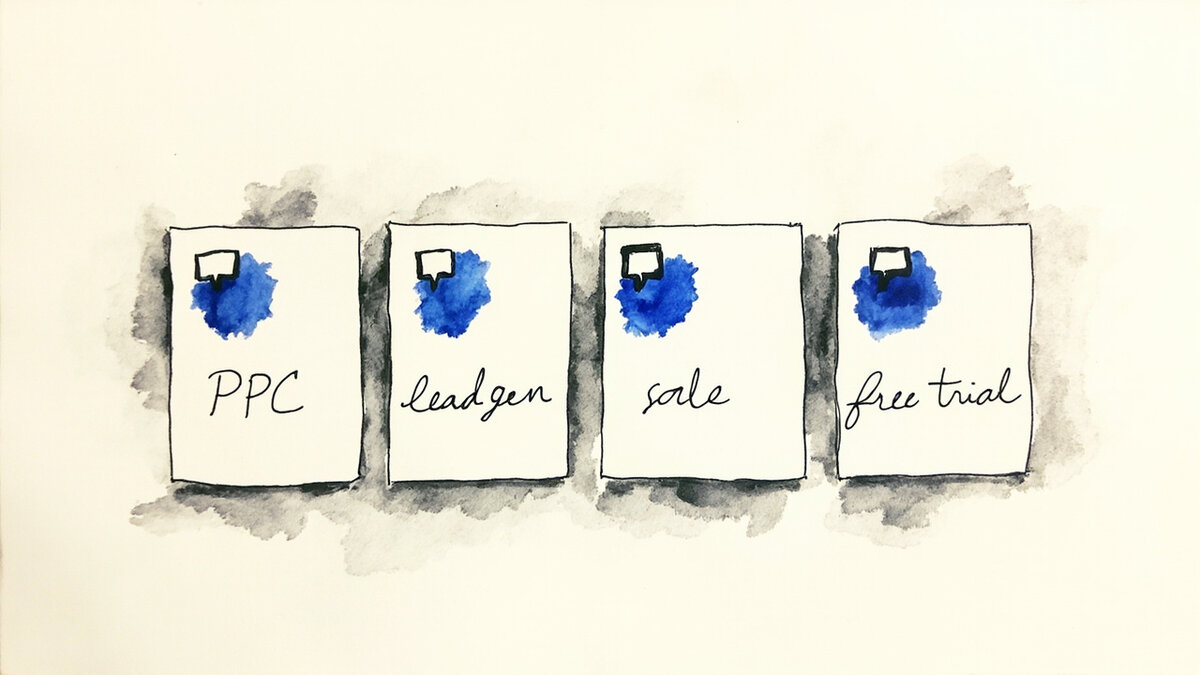
Landing pages come in 4 distinct types. Each type requires a different testimonial format.
Type 1: PPC landing page. Reached via paid search ads. The visitor’s query is high-intent. The testimonial must address the visitor’s specific concern. A PPC landing page for “testimonial software for agencies” needs a testimonial that names agencies specifically. A generic testimonial underperforms.
Type 2: Lead generation landing page. Reached via content offers (whitepapers, ebooks, webinars). The visitor is exchanging contact info for content. The testimonial should describe the value of similar content or the offer. Format: short, decision-skewed.
Type 3: Sales landing page. Reached via sales-driven campaigns (event invitations, demo requests, discovery calls). The visitor is mid-funnel. The testimonial should describe the outcome of working with your sales team. Format: outcome-focused with name and company.
Type 4: Free trial signup. Reached via trial conversions. The visitor is signing up for a product trial. The testimonial should describe the onboarding experience and early value. Format: first-week outcome narrative.
The 4 types each need a different testimonial angle. A testimonial that works on a PPC page underperforms on a free trial page. Match the testimonial to the page type.
The 3 placement rules for landing pages
Landing pages have specific placement rules. The 3 rules below come from observing 100+ landing pages.
Rule 1: Place the testimonial near the CTA. The CTA is the conversion target. The testimonial near the CTA addresses the buyer’s hesitation at the moment of decision. Distance from the CTA reduces impact.
Rule 2: Use 1-2 testimonials, not 6. Landing pages are short. The visitor scrolls quickly. 6 testimonials create visual noise. 1 strong testimonial + 1 supporting testimonial is the right balance.
Rule 3: Match the testimonial to the offer. The testimonial must address the same pain point the landing page is targeting. A testimonial about speed does not belong on a landing page about cost savings.
The 3 rules apply to all landing page types. The right testimonial at the right placement maximizes the conversion impact.
The 4 conversion lift statistics for landing page testimonials
The conversion lift data from landing page A/B tests shows consistent patterns. The 4 statistics below are the benchmarks.
Lift statistic 1: Landing pages with 1 testimonial + CTA convert 10-30% higher than landing pages without. Source: Unbounce and Instapage A/B test aggregations. The single-testimonial pattern is the most reliable.
Lift statistic 2: Landing pages with a video testimonial convert 20-50% higher than text-only. Source: Wistia landing page studies. The video format requires more effort but produces disproportionate impact.
Lift statistic 3: Landing pages with industry-specific testimonials convert 5-15% higher than generic testimonials. Source: Conversion optimization industry data. The specificity match is the difference.
Lift statistic 4: Landing pages with testimonial + review count (“used by 5,000+ teams”) convert 8-15% higher than testimonial alone. Source: BigCommerce case study data. The volume adds an aggregate trust signal.
The 4 statistics show that testimonial quality, format, and context all contribute. The right combination produces 30-80% conversion lift in extreme cases. For the broader umbrella guidance across all formats, see testimonial best practices.
The 3 anti-patterns to avoid
The 3 anti-patterns below damage landing page conversion. Avoiding them preserves the impact.
Anti-pattern 1: Testimonial that contradicts the offer. A testimonial about saving time on a landing page about saving money creates dissonance. Visitors leave. Match the testimonial to the offer literally.
Anti-pattern 2: Testimonial placed below the fold. Visitors who do not scroll will not see the testimonial. Place the testimonial above the fold, near the CTA. Below-the-fold is wasted space.
Anti-pattern 3: Anonymous testimonial. Anonymous testimonials carry less weight. “A customer” is not credible. Use a named testimonial whenever possible. Anonymous falls back only when the customer explicitly asks for it.
The 3 anti-patterns show up in 30% of landing pages. Fixing them produces measurable conversion lift.
How to test which format works for your landing page
Testing is the only way to know which testimonial format works for your specific landing page. The 4-step testing process below is the standard.
Step 1: Pick the variable. Most landing page tests should isolate one variable at a time. Test “testimonial vs no testimonial” first, then “video vs text testimonial” second.
Step 2: Set up the A/B test. Use a landing page testing tool (Unbounce, Instapage, VWO). Run both variants to 50% of traffic. Set a minimum sample size (typically 200 conversions per variant for statistical significance).
Step 3: Measure conversion rate. The success metric is the visitor-to-lead conversion. Statistical significance requires the sample size. Without it, the test is inconclusive.
Step 4: Roll out the winner. Once a variant wins with significance, roll it out. Run the next test against the new baseline.
The 4-step process produces reliable data. Most landing pages benefit from 2-3 rounds of testing before the testimonial strategy stabilizes.
What changes when you ship landing page testimonials systematically
The shift is visible in 3 metrics within 90 days of systematic landing page testimonial optimization.
Metric 1: Landing page conversion rate. Each landing page with an optimized testimonial converts 10-30% higher than without. The cumulative effect across a portfolio of landing pages is significant.
Metric 2: Cost per acquisition. Higher conversion with the same ad spend reduces cost per acquisition. The savings fund further optimization.
Metric 3: Sales cycle length. Visitors who see a landing page testimonial arrive at sales calls with higher familiarity. The sales cycle shortens by 5-15% on average.
The right landing page testimonial strategy is a continuous optimization loop. Test, measure, roll out, test again. The compounding effect lifts every marketing investment. For testing data anchored on real numbers, see testimonial statistics.
How landing page testimonials interact with AI search
Landing pages appear in AI search results differently than in traditional search. The 4 impacts below explain.
Impact 1: AI answers often skip landing pages. AI systems prefer the destination the visitor would reach naturally. A landing page built only for paid traffic may not surface in AI answers. Use the page for paid traffic; do not expect AI citations.
Impact 2: Testimonials on landing pages still matter for the visit. When visitors land from any source (paid, organic, AI), the testimonial helps. The testimonial’s job is post-landing-page conversion, not pre-arrival.
Impact 3: AI search traffic converts similarly to organic. Once a visitor lands, the testimonial works the same regardless of the source. The conversion optimization is independent of the traffic source.
Impact 4: Structured data on landing pages can still help. Even if AI does not cite the landing page directly, the structured data feeds search engines. The page ranks for the right queries.
The 4 impacts show that landing page testimonials continue to matter in the AI era. The optimization changes are minor. Platforms like Testivo allow you to maintain a single testimonial library that deploys across landing pages, product pages, and the dedicated testimonials page , so the same asset can be re-targeted per placement without duplicating effort.
5 landing-page-specific testimonial formats that convert
Beyond the basic ask, the 5 testimonial formats below are designed specifically for landing pages.
Format 1: Social proof badge with quote. A compact badge combining aggregate rating (4.7 stars) with a single short quote. The format works above the CTA. The compact density respects the landing page scan mode.
Format 2: Outcome-first headline testimonial. The testimonial is the headline itself. The hero text reads like a customer wrote it. The format works for offer pages where the headline is the first decision point.
Format 3: Customer logo grid with attribute filter. A grid of 8-12 customer logos, with hover text showing the testimonial. The format works for trust at first glance. Visitors who hover see the depth.
Format 4: Single-quote testimonial card. A single testimonial card with full attribution, occupying a fixed position on the page. The format works for repeat visitors and for visitors who scroll to the CTA area.
Format 5: Video testimonial embedded inline. A 30-60 second video placed below the hero, above the CTA. The format works for higher-consideration offers where the visitor wants depth.
The 5 formats cover most landing page testimonial strategies. Choose the one that matches the visitor reading mode and the offer complexity. Related: funnel + landing page alignment. Related: landing page template.