
Testimonial campaign: 5 phases over 12 weeks
You want to launch a testimonial-led growth campaign. You have 30 testimonials in a library. You have a 12-week window before the next board meeting. You need a plan that produces measurable lift in awareness, conversion, and pipeline within the window.
A testimonial campaign is not “post more testimonials.” It is a 5-phase architecture (collect, curate, deploy, measure, iterate) executed over 12 weeks with specific milestones and measurement frameworks. This guide covers the 5-phase campaign architecture, the 12-week timeline, the 4 campaign types, the 3 measurement frameworks, and the 5 failure modes to avoid.
It is for marketing leaders who want to launch a testimonial-led growth initiative with measurable outcomes.

The 5-phase campaign architecture
The 5 phases below are the canonical sequence. Each phase has deliverables and exit criteria.
Phase 1 (weeks 1-2): Collect. Audit the existing library, identify gaps, run a focused collection sprint. Target: 50-100 high-quality testimonials covering the top 5 personas and top 5 use cases.
Phase 2 (weeks 3-4): Curate. Apply the quality rubric. Tag by persona, use case, outcome. Build the publication-ready library. Target: 30-50 publication-ready testimonials, scored 18+ out of 25 on the quality rubric.
Phase 3 (weeks 5-8): Deploy. Launch the campaign across 4-6 channels. The 4-phase deployment: home page, pricing page, sales deck, email, social ads, AI search citations. Target: testimonials live on 4-6 channels.
Phase 4 (weeks 9-10): Measure. Run the 3 measurement frameworks (volume, distribution, conversion). Compare against pre-campaign baseline. Target: 5-15% lift in target metrics.
Phase 5 (weeks 11-12): Iterate. Refresh underperformers, retire low scorers, expand to 2-3 additional channels. Target: sustainable testimonial engine running at scale.
The 5 phases produce a measurable campaign within 12 weeks. Each phase has clear exit criteria.
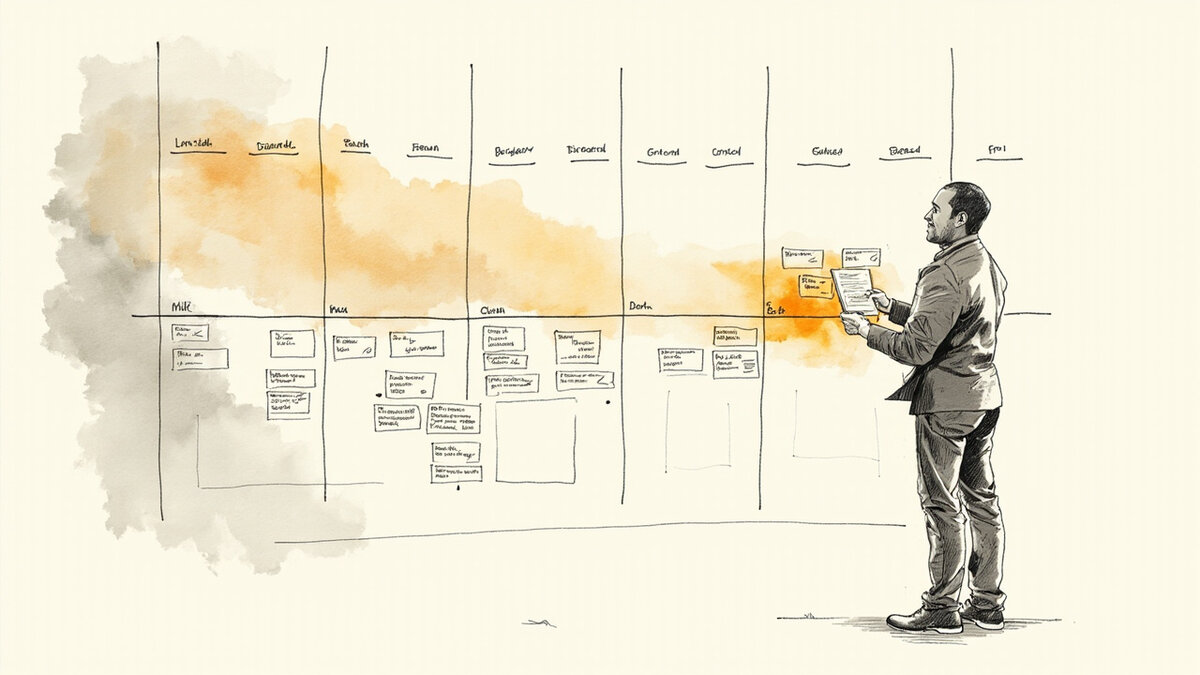
The 12-week timeline with milestones
The timeline below is the standard rollout. Adjust for campaign size.
Week 1: Audit library. Identify gaps. Brief the team. Set goals (lift targets, channel targets).
Week 2: Collection sprint. Reach out to 50-100 customers. Use the 4-prompt brief. Set response deadline at 7 days.
Week 3: Quality review. Apply the rubric. Edit. Get customer approval.
Week 4: Library build. Tag, organize, prepare publication versions.
Week 5: Home page launch. Publish top 5 testimonials. Set up tracking.
Week 6: Pricing page launch. Add testimonial to plan comparison. Track conversion lift.
Week 7: Sales deck launch. Train sales team on testimonial usage. Track pitch usage.
Week 8: Email + social launch. Newsletter, signature, social ads. Track click-through and conversion.
Week 9: Measurement round 1. Aggregate data. Identify top performers. Identify underperformers.
Week 10: Refresh + iterate. Replace low performers with high performers. Adjust channels.
Week 11: Expansion. Add 2-3 new channels (AI search, onboarding, support). Add new testimonials.
Week 12: Final report. Aggregate results. Plan ongoing campaign for next quarter.
The 12-week timeline is the standard. Larger campaigns may extend to 16-20 weeks.
The 4 campaign types
The 4 types below cover most campaign scenarios. Choose based on business stage.
Type 1: Launch campaign. New product or major feature. Target: awareness + early adoption. Volume: 20-50 testimonials. Channels: home, pricing, social ads. Timeline: 12 weeks.
Type 2: Ongoing campaign. Established product, continuous collection. Target: library growth + distribution expansion. Volume: 10-20 new testimonials per quarter. Channels: 6-10 active. Timeline: quarterly cycles.
Type 3: Crisis campaign. Negative event, need rapid trust rebuild. Target: rapid collection + targeted placement. Volume: 10-20 testimonials in 4-6 weeks. Channels: press page, sales decks, specific persona-targeted campaigns.
Type 4: Repositioning campaign. Product pivot or new positioning. Target: alignment with new positioning. Volume: 30-50 testimonials, refresh or retire old ones. Channels: all active channels reset.
The 4 types cover most scenarios. Most companies run Type 2 (ongoing) with periodic Type 1 (launch) or Type 4 (repositioning) campaigns.
The 3 measurement frameworks
The 3 frameworks below measure campaign impact. Each captures a different dimension.
Framework 1: Volume metrics. Total testimonials collected, percentage tagged, percentage published, percentage deployed across channels. The framework measures library health.
Framework 2: Distribution metrics. Channels using testimonials, average deployment per testimonial, channel-level engagement (clicks, scroll depth), conversion lift per channel. The framework measures reach.
Framework 3: Conversion metrics. Pages with testimonials vs without (A/B test). Sales cycle length with vs without testimonial pitch. AI citation count. Pipeline influenced by testimonial content. The framework measures business impact.
The 3 frameworks measure the campaign from library health to business impact. Most campaigns under-measure by skipping Framework 3.
The 5 failure modes to avoid
The 5 failure modes below are the most common campaign failures. Avoiding them preserves the campaign’s value.
Failure mode 1: Collection without deployment. The team collects 50 testimonials but only publishes 5. The remaining 45 sit unused. The fix is the deployment phase with channel targets.
Failure mode 2: Deployment without measurement. The team publishes testimonials but does not measure impact. Without measurement, the campaign cannot prove value. The fix is Framework 3 (conversion metrics).
Failure mode 3: Measurement without iteration. The team measures but does not refresh underperformers. The campaign plateaus. The fix is Phase 5 (iterate).
Failure mode 4: No alignment with business goals. The campaign runs but is not connected to pipeline or revenue. The team cannot justify continued investment. The fix is the goal-setting in week 1.
Failure mode 5: Quality drift. The campaign collects volume at the expense of quality. The library fills with low-quality testimonials. The fix is the quality rubric applied at every collection phase.
The 5 failure modes are the most common ways campaigns fail. Avoiding them produces a campaign that delivers measurable ROI.
How to maintain the campaign as an ongoing engine
The 5 tactics below turn the 12-week campaign into a permanent engine.
Tactic 1: Quarterly campaign cycles. Repeat the 5-phase architecture each quarter. Adjust scope based on business priorities.
Tactic 2: Permanent library curator. One person owns the library 4 hours per week. The curator runs collection, curation, and retirement.
Tactic 3: Channel-specific deployment cadence. Each channel gets testimonial refresh on a fixed schedule (monthly for social, quarterly for home page, etc.).
Tactic 4: Permanent measurement dashboard. The 3 frameworks reported monthly to the team. The dashboard catches drift early.
Tactic 5: Continuous collection. Always collecting. The pipeline never stops. New customers become new testimonials within 30-60 days of activation.
The 5 tactics turn the campaign into an engine. Without them, the campaign is a one-time project that decays. Testimonial platforms like Testivo handle the plumbing for the 5-phase architecture (collection links, brief templates, rubric scoring, channel-tagged publishing, and AI search schema), so the team focuses on campaign strategy rather than the operational coordination across 12 weeks.
Your next move: choose your campaign type (Launch / Ongoing / Crisis / Repositioning). Set your 12-week timeline. Identify the team roles (curator, reviewer, customer, compliance). Brief the team. Run the audit in week 1. The campaign begins.
The 4 budget tiers for testimonial campaigns
The 4 tiers below match budget to campaign scope. Most B2B SaaS campaigns fall into Tier 2 or Tier 3.
Tier 1 (bootstrap, $0-500): Manual collection via email. Free testimonial platform with limited features. 20-50 testimonials over 12 weeks. Single curator part-time.
Tier 2 (small, $500-2,500): Email + in-app collection. Paid testimonial platform with full features. 50-100 testimonials. Dedicated curator 4-8 hours per week.
Tier 3 (mid-market, $2,500-10,000): Email + in-app + dedicated collection sprint. Paid platform + video recording. 100-200 testimonials. Curator + reviewer team.
Tier 4 (enterprise, $10,000+): Full collection + curation + creative production. Platform + agency support. 200+ testimonials. Dedicated team.
The 4 tiers cover most campaign budgets. The right tier depends on company size, product complexity, and campaign scope.
The 4 stakeholder alignment tactics
The 4 tactics below align the campaign with internal stakeholders. Without alignment, the campaign loses support before producing results.
Tactic 1: Executive sponsorship. A named executive owns the campaign outcomes. Sponsorship prevents the campaign from being deprioritized.
Tactic 2: Sales team buy-in. Sales is involved in the brief design and the deployment strategy. Their buy-in ensures the campaign produces sales-enablement content they will use.
Tactic 3: Customer success partnership. CS helps identify happy customers for collection. Their partnership produces higher-quality testimonials.
Tactic 4: Product team coordination. Product confirms feature accuracy and flag stale references. Coordination prevents publication of inaccurate testimonials.
The 4 tactics produce cross-functional alignment. Without alignment, the campaign runs in isolation and produces less impact.
How to scale a testimonial campaign across markets
The 5 tactics below scale the campaign from one market to multiple markets. Most companies expand to 2-3 markets within the first year.
Tactic 1: Locale-specific testimonials. Collect testimonials from customers in each target market. Locale-specific testimonials resonate 3-5x more than translated ones.
Tactic 2: Translation strategy. Use customer-provided translations rather than machine translation. Native-language testimonials are stronger signals than translated ones.
Tactic 3: Currency and pricing alignment. Testimonials that reference pricing in the local currency land harder than USD-only references. The fix is asking customers to use local currency.
Tactic 4: Regional compliance. GDPR for EU, LGPD for Brazil, PIPL for China. Each market has specific testimonial consent requirements. Compliance is a per-market checklist.
Tactic 5: Localized testimonial channels. Some markets prefer video, others prefer text. Some rely on third-party platforms (Trustpilot in Europe, G2 in US). Match the channel to the market.
The 5 tactics enable multi-market campaigns. Without them, campaigns scale poorly across regions.
Related reading: the marketing strategy layer; the funnel stages; deploying across channels; measuring the conversion lift.