
Review management: the 4-step process, the 5 platforms, and the 4 tools
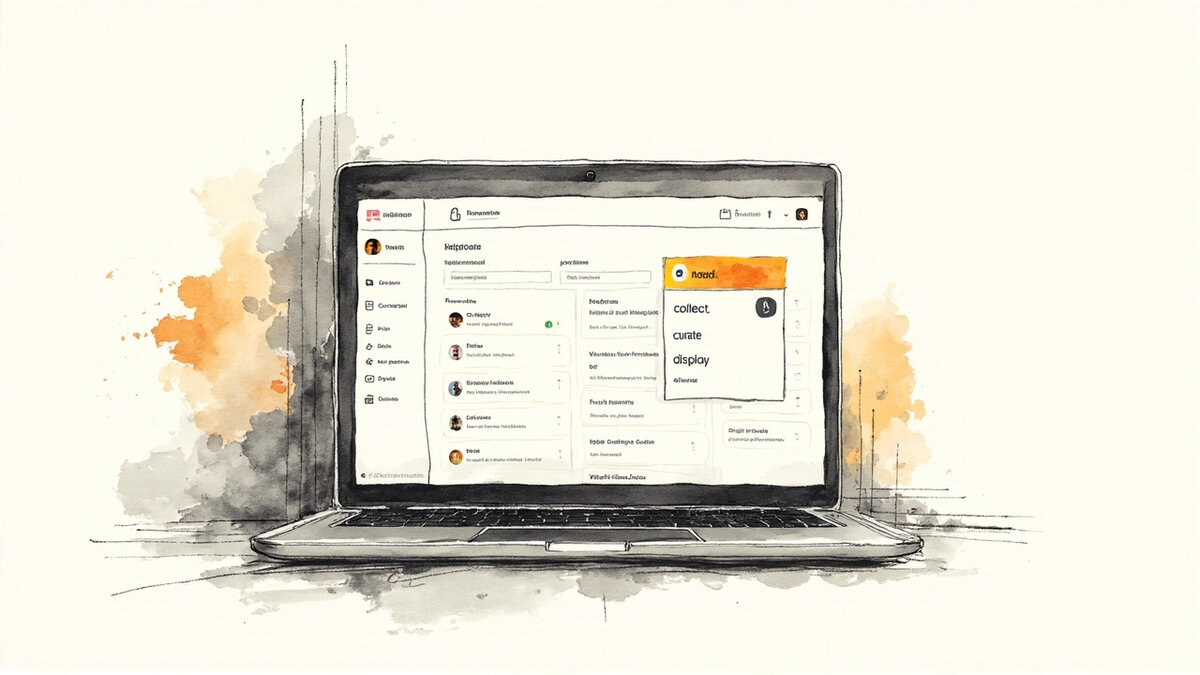
Review management is the process of collecting, monitoring, responding to, and analyzing customer reviews across multiple third-party platforms (Google, G2, Capterra, Trustpilot, Yelp).
It is distinct from testimonial collection, which is the team’s own curated proof on their own website. The two work together: reviews are third-party validation, testimonials are first-party proof. The right review management system covers 4 steps, 4 tools, and 3 response strategies.
This page is the review management category. The testimonial software page is the category overview. The best testimonial software page is the top-6 roundup. The testimonial software pricing page is the pricing view.
The testimonial to alternatives page is the 1:1 alternatives. The testimonial forms page is the form-based collection. This page is the review management view: the 4-step process, the 5 platforms, the 4 tools, and the 3 response strategies.
What review management is, and what it isn’t
Review management is the ongoing operational practice of monitoring, responding to, and analyzing customer reviews on third-party platforms. The third-party platforms are external: Google Business Profile, G2, Capterra, Trustpilot, Yelp, Amazon, App Store, and any vertical-specific review site. The reviews are written by customers. The team responds, when appropriate, and learns from the patterns.
Review management is not testimonial collection. Testimonial collection is the team’s own process: ask a customer, get the testimonial, publish it on the team’s own website. The testimonial is curated (the team picks the best ones). The review is uncurated (any customer can write one). The two are different in source, in format, in lifecycle, and in response strategy.
Review management is also not reputation management in the broader sense. Reputation management includes PR, crisis communication, executive visibility, and brand mentions. Review management is one slice of reputation, focused specifically on customer reviews.
For the form-based collection that complements review monitoring, see the testimonial forms.
The 3 reasons it differs from testimonial collection
The first reason is source. Reviews come from the customer, unprompted, on a third-party platform. Testimonials come from the team, prompted, on the team’s own website. The review is the customer’s initiative. The testimonial is the team’s initiative.
The second reason is response. Reviews require a response. The team’s response to a positive review reinforces the relationship. The team’s response to a negative review can recover a customer. Testimonials do not require a response. The customer said what they said. The team uses it.
The third reason is volume. Reviews come in unpredictably: 0 one day, 5 the next. The team has to monitor constantly. Testimonials come in by request: the team asks 10 customers, 3 respond. The team has a steady pipeline but a small one. The volume profile is different. The operational approach is different.
The 4-step review management process
Step 1 is to claim the profiles. The team claims the Google Business Profile, the G2 profile, the Capterra profile, the Trustpilot profile, the Yelp profile, and any vertical-specific review site. The claiming is the prerequisite for responding.
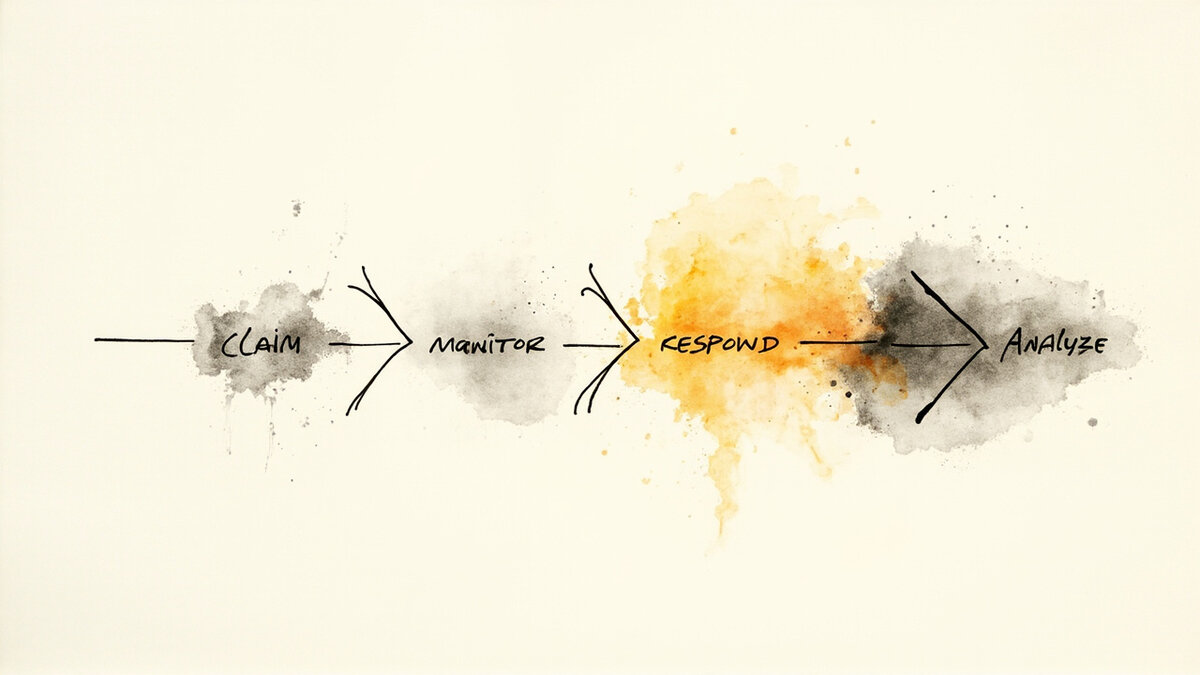
Step 2 is to monitor continuously. The team sets up alerts (Google Alerts, platform notifications, third-party monitoring tools). The team checks the profiles daily. The team has a single dashboard view across platforms. The monitoring is the floor.
Step 3 is to respond. The team responds to every review, positive or negative, within 24 hours. The response to a positive review is short and warm. The response to a negative review is longer, more thoughtful, and (where appropriate) includes an offer to make it right. The response is the human moment.
Step 4 is to analyze. The team tracks volume (how many reviews per month), sentiment (positive vs negative ratio), velocity (how fast reviews come in), and themes (what topics come up most). The analysis feeds back into the product, the service, the messaging. The analysis is the loop.
The 5 main review platforms
The first platform is Google Business Profile. The reviews show up in Google Search and Google Maps. The platform is the most important for local businesses. The platform is free to claim and free to use.
The second platform is G2. The reviews are for B2B SaaS. The platform is the most-cited B2B software review site. The platform has a paid tier for vendors to claim their profile and respond. G2 reviews are weighted heavily in B2B software buying decisions.
The third platform is Capterra. The reviews are for B2B SaaS. The platform is the second-most-cited B2B software review site after G2. Capterra has similar paid tier mechanics. Capterra reviews are weighted in B2B software buying decisions.
The fourth platform is Trustpilot. The reviews are for any business. The platform is the broadest third-party review site. Trustpilot has a free tier and a paid tier. Trustpilot reviews are visible in Google search results as star ratings.
The fifth platform is Yelp. The reviews are for local businesses, restaurants, services. The platform is the most-cited local review site after Google. Yelp is harder to claim and respond. The platform is the historical standard.
For the broader category of review and testimonial tools ranked side-by-side, see the best testimonial software.
The 4 main review management tools
The first tool is Birdeye. The tool aggregates reviews from multiple platforms into a single dashboard. The tool includes response templates, sentiment analysis, and reporting. The tool is best for multi-location local businesses.
The second tool is Podium. The tool is similar to Birdeye but with stronger webchat and text-message integration. The tool is best for businesses that want to combine review management with customer messaging.
The third tool is ReviewTrackers. The tool is a more focused review monitoring and response platform. The tool is best for businesses that want depth on the monitoring side, not the messaging side.
The fourth tool is Reputation.com. The tool is the most comprehensive. The tool includes review management, social listening, surveys, and listings management. The tool is best for enterprises that need everything.
The 3 response strategies
The first strategy is the positive review response. The team responds within 24 hours. The response is short (1-2 sentences). The response thanks the customer by name. The response references the specific outcome the customer mentioned. The response is the reinforcement.
The second strategy is the neutral review response. The team responds within 24 hours. The response is medium-length (2-3 sentences). The response thanks the customer. The response acknowledges the specific concern. The response explains what the team is doing about it. The response is the engagement.
The third strategy is the negative review response. The team responds within 24 hours. The response is longer (3-5 sentences). The response acknowledges the failure. The response apologizes. The response explains what the team is doing to fix the issue. The response offers to make it right offline. The response is the recovery.
The 3 things to monitor
The first thing is volume. The team tracks how many reviews come in per platform per month. The volume is the leading indicator. The team sees the volume grow as the team asks more customers to leave reviews.
The second thing is sentiment. The team tracks the positive vs negative ratio. The team aims for 80%+ positive. The team uses the negative reviews to learn what the team should fix.
The third thing is velocity. The team tracks how fast reviews come in. The velocity is the freshness signal. The recent review (last 30 days) is more credible than the old review (last 2 years).
For the side-by-side alternatives between specific tools, see the testimonial-to-alternatives.
The 3 things to do this week
The first thing is to claim the 5 main profiles. The team claims Google Business Profile, G2, Capterra, Trustpilot, and Yelp. The claiming is the prerequisite for everything else.
The second thing is to respond to every existing review. The team responds to all reviews, positive and negative, with the strategies above. The team gets the backlog to zero within 7 days.
The third thing is to set up the monitoring alerts. The team sets up Google Alerts, platform notifications, and a daily 10-minute review check. The team builds the operational habit.
For the customer reviews category (5 sources, 4 formats), see the customer reviews.
The journey after this page
If you have the review management view and want the broader category, the testimonial software page is the parent reference. For the top-6 roundup, the best testimonial software page is the dedicated reference.
For the pricing view, the testimonial software pricing page is the reference. For the free-tier view, the free testimonial tools page is the reference. For the 1:1 alternatives, the testimonial to alternatives page is the reference.
For the testimonial side (the team’s own proof), the testimonial forms page is the form-based collection. The how to collect testimonials page is the collection process. The customer case studies page is the long-form proof. The two work together: reviews are third-party validation, testimonials are first-party proof.
For teams that want to bring the best of the third-party reviews onto the team’s own website, Testivo is one tool that supports importing reviews from G2, Capterra, Trustpilot, and CSV exports. The team’s own wall is the curated surface. The reviews are the raw material. The tool is the bridge.
The 4 main tools listed (Birdeye, Podium, ReviewTrackers, Reputation.com) are the most-mentioned in the category, but the category has dozens of tools. The right tool depends on the business size, the platform mix, and the budget. The free and low-cost end has options like Google Business Profile (free) and Trustpilot (free tier). The mid-market has Birdeye and Podium. The enterprise has Reputation.com.
For European audiences, GDPR consent requirements apply to review publication just as they do to testimonials. The consent must be specific, informed, and documented at submission time.
Review platforms are one of the highest-yield aggregation sources. For the continuous aggregation workflow, see the testimonial aggregator guide. Related: third-party review sources. Related: review widgets for embedded display. Related: review platform collection. Related: Trustpilot in review management.